Nabratein; Naburiya; Navoraya; Kefar Niburaya Complete
Localization
Site plan
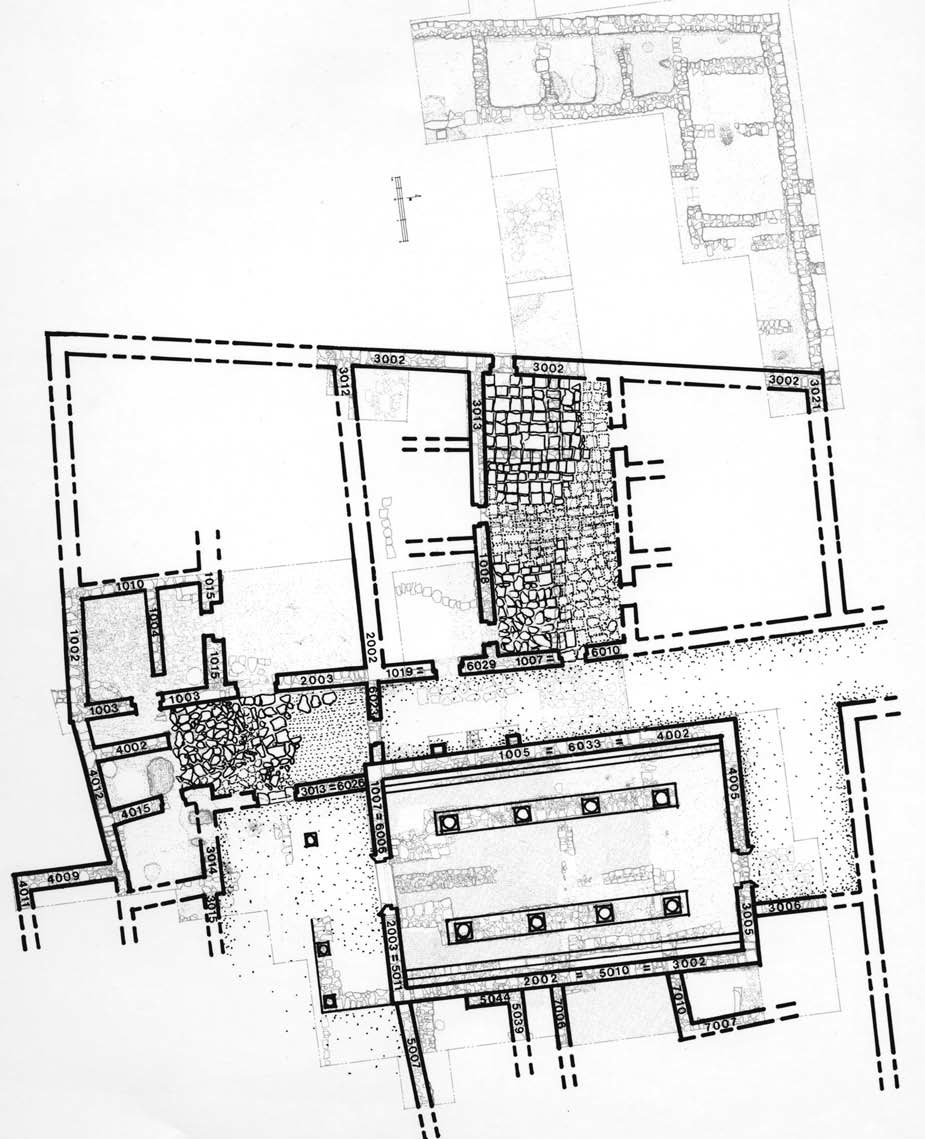
Description
Nabratein, also referred to as Kefar Neburaya/Navoraya, is the location of an ancient Jewish prayer hall in the Upper Galilee. The site lies along Wadi ‘Amuqa (Wadi Dalton), north of Safed and immediately south of the modern town of Dalton. Nineteenth-century explorers of Palestine, among them Charles Wilson and Ernest Renan, recorded the remains; Renan published the lintel inscription in 1864 without providing a translation. A systematic survey was conducted in 1905 by H. Kohl and C. Watzinger, whose German expedition issued drawings of several architectural components together with a general plan of the structure. Their interpretations remained largely unaltered until excavations in the summers of 1980 and 1981, directed by E. M. Meyers, led to revisions. The comprehensive final report appeared in 2009. J. Magness subsequently challenged parts of the publication, most concisely in a 2010 article, to which Meyers replied in the same year. Plan source: Meyers&Meyers 2009: 62, fig. 15. Further reading: Magness, J. 2010. "Review: The ancient synagogue at Nabratein," [in:] BASOR, vol. 358, 61-68. Meyers, E.M. 1993. "Nabratein" The New Encyclopedia of Archeological Excavations in the Holy Land, 1077-1079. Meyers, E. M. and Meyers, C. L. 2009. Excavations at Ancient Nabratein: Synagogue and Environs. Winona Lake; Indiana. Meyers, E. M. and Meyers, C. L. 2010. "Response to Jodi Magness's Review of the Final Publication of Nabratein" BASOR, vol. 359, 67-76. Milson, D.W. 2007. Art and Architecture of the Synagogue in Late Antique Palestine. In the Shadow of the Church, Leiden, 52-53, 442-445. https://synagogues.kinneret.ac.il/synagogues/nabratein/