Japhia Complete
Localization
Site plan
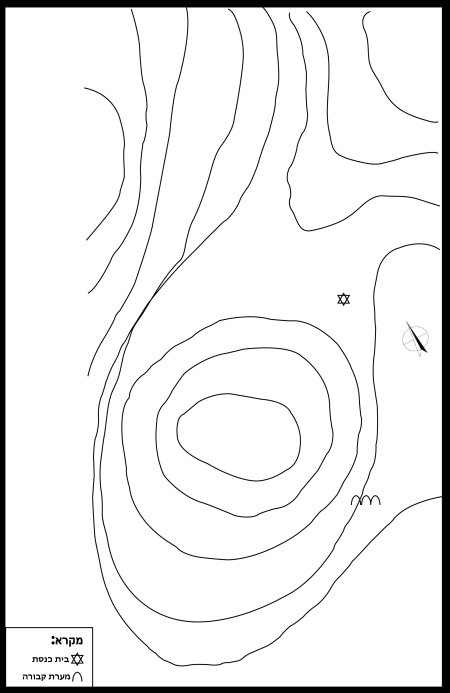
Description
Japhia—known in the modern period as the Arab village of Yafa—was an ancient settlement in the Lower Galilee, situated roughly 2 km southeast of central Nazareth. It appears among the towns allotted to the tribe of Zebulun (Joshua 19:12). A later Christian tradition identifies the site as the birthplace of James, son of Zebedee. During the Jewish revolt against Rome, the town is noted by Josephus; in 67 CE, acting under orders, Titus captured Japhia, and most of its inhabitants were killed. The Roman and Byzantine settlement occupied the crest of a man‑made mound (tell) that had experienced uninterrupted habitation since the early Iron Age. Numerous rock-cut installations and burial caves are clustered in the southeastern sector. The ceramic assemblage spans the Chalcolithic, Bronze and Iron Ages, and continues through the Roman and Byzantine periods. Architectural fragments publicized by L. H. Vincent in 1921—two lintels found in the village—pointed to a synagogue of Late Antique date: one lintel bears a carved menorah flanked by rosettes, while the other shows a central wreath with eagles on either side, each holding a small wreath in its beak. In 1950, E. L. Sukenik excavated the remains of this synagogue on the northeastern part of the hilltop. Plan source: https://survey.antiquities.org.il/index_Eng.html#/MapSurvey/2154/site/22473 Further reading: Barag, D. 1993. "Japhia," [in:] The New Encyclopedia of Archeological Excavations in the Holy Land: 659-660. Milson, D.W. 2007. Art and Architecture of the Synagogue in Late Antique Palestine. In the Shadow of the Church, Leiden, 473. https://synagogues.kinneret.ac.il/synagogues/japhia/