Iamnia; Yavneh; Yibna Complete
Localization
Site plan
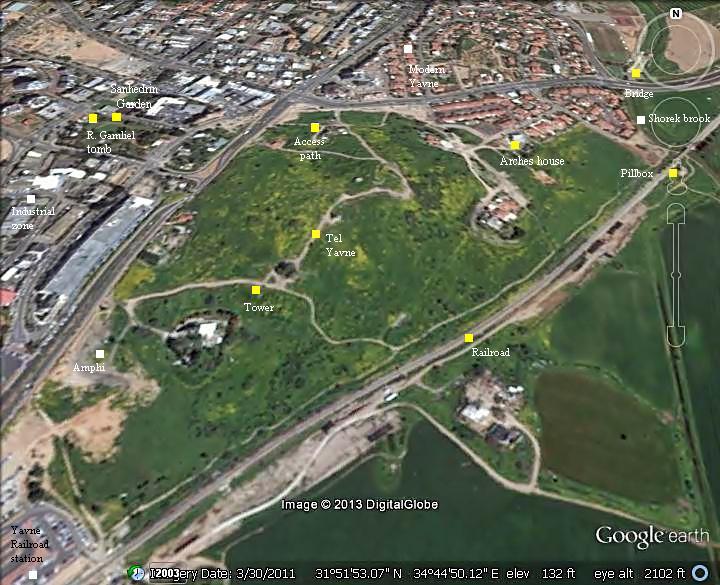
Description
Iamnia is depicted on the late sixth-century Madaba Map, where it is labeled Ἰαβνὴλ ἡ καὶ Ἰάμνια (“Iabneel, also called Iamnia”). In Late Antiquity the town had its own bishop, documented among the participants in the councils of Nicaea (325), Chalcedon (451), and Jerusalem (518). Earlier, from the aftermath of the First Jewish–Roman War until the Bar Kokhba revolt—approximately a century—it served as the seat of Jewish leadership and the location of the Sanhedrin. Throughout its history, recurrent religious tensions between Jewish and non-Jewish inhabitants are noted. Whether Iamnia ever possessed formal civic status is uncertain. The site’s occupation reaches back at least to the Iron Age. During the Hellenistic period it was brought under Hasmonean control, either by John Hyrcanus or by Alexander Jannaeus. In the mid-first century BCE, Pompey incorporated the town into the Roman province of Judea. Following Herod’s death, his sister Salome received Iamnia among her holdings; she later bequeathed it to Livia Drusilla. After Livia’s death, the town became imperial property. Further reading: CIIP III Introduction to Iamnia, 151-157. https://www.biblewalks.com/yavne